
 (360) 433-9870
Our 6 Point Checklist To Get Your Business Ready For Google’s Announced AI Search Changes.
If your agency isn’t telling you about the below, you may want to reconsider your digital strategy.
On May 19th 2026 at Google I/O Conference, Google told the entire internet how its AI will now decide which businesses get found, and which ones disappear. Buried under these acronyms are six concrete changes every service-area business needs to make, or risk going invisible. Read them, then ask one simple question: is the agency you are paying every month actually doing these six things? Because for the record, City Ranked has been doing all six of these for over a decade, and we will show you the proof on each one.
On May 19th at the Google I/O Conference, Google said the quiet part out loud. It told us exactly how its AI reads a website, decides who is trustworthy, and chooses which business to put in front of a homeowner who is ready to buy.
Most owners will read about this, become overwhelmed, and do nothing. Worse, most agencies will keep selling the same old tactics they have for years, a book of tactics that will now actively working against you as the business owner.
So I compiled the below list as a resource for you as a reference of the main things you as a business owner should be paying attention to when it comes to attaining rankings for your business in Google’s new AI search experience. The six changes that actually matter, each one tied to what Google officially said. Use it as a checklist. Go down the list and ask whether your current agency is doing each one. If they are not, you now know exactly what to ask them.
And on every single point, I will show you where City Ranked has already been doing this, not since the announcement, but for years.
Shift 1: Your Website Has to Be Built So a Machine Can Read It
Google’s new search agents do not “read” your site the way a person does, and LLM’s in general do not “discover” your content the way Google Bot did. AI Agents scan it, looking for clean, organized blocks of information they can lift and quote. Google’s own developer guidance now states plainly that structured data: Schema markup, is how its AI maps the entities that matter: your exact business name, your specific services, your real location. Without it, the AI is guessing your information, which is unreliable.
Source: Google Search Central Developer Guidelines, updated for generative search.
This idea, organizing a website into clean, self-contained topic clusters so search engines can follow it is not new to us. It’s an SEO best-practice called content siloing. Bruce Clay introduced the concept years ago SEO Content Silos, and at the time half the SEO world called it unnecessary and told service businesses not to bother.
We bothered. City Ranked has built websites on a content-silo foundation for almost fifteen years. The structure that much of the industry is now rushing to adopt because an AI demands it is the structure we have been quietly building the whole time. Content siloing has been a heavily debated subject in SEO, and now however you want to term it, content silos, or content clustering, it’s now recommended.
Shift 2: Entities and Brand Mentions Now Beat Backlinks
For more than two decades, the SEO game was about backlinks, getting other sites to link to yours. Google’s AI cares about something different now: entities. It wants to see your brand named consistently across sources it already trusts — directories, roundups, podcasts, industry listings, authoritative citations, so it can confidently say “this is a real business, and here is what it does.”
This is exactly why entity schema matters, and we did not discover it on May 19th. City Ranked has been implementing entity, organizational, and parent/child organizational schema (to name just a few) for local and nationwide businesses since 2015. We published our own breakdown of it back then (2015 Blog Article by City Ranked: JSON-LD Schema Markup). While agencies were still buying backlinks, we were teaching Google who our clients were in the language Google’s AI now depends on.
Link building can be a very dangerous SEO strategy, and a strategy that City Ranked has never offered because of its historical association to Black Hat SEO. Link building has been time and again discussed by Google as against their policies.
This is also where Google drew a hard line at I/O: your schema must match what is actually on your page. If your code says you close at 5:00 PM, your website and your Google Business Profile had better say 5:00 PM too. Mismatches get your data flagged as unreliable and your visibility drops.
City Ranked has had the answer for this, developing our own set of proprietary WordPress Plugins which are now deployable on just about any website platform using our ‘Lite’ version. Our clients have had these advancements programmed directly into their websites since the mid-2010’s. Our software incorporates heavy use of the dynamic properties of WordPress to create sitewide schema markup, helping our clients broadcast their businesses most important information to bots and agents visiting their website. This is the same information that Google’s agents will now be looking for.
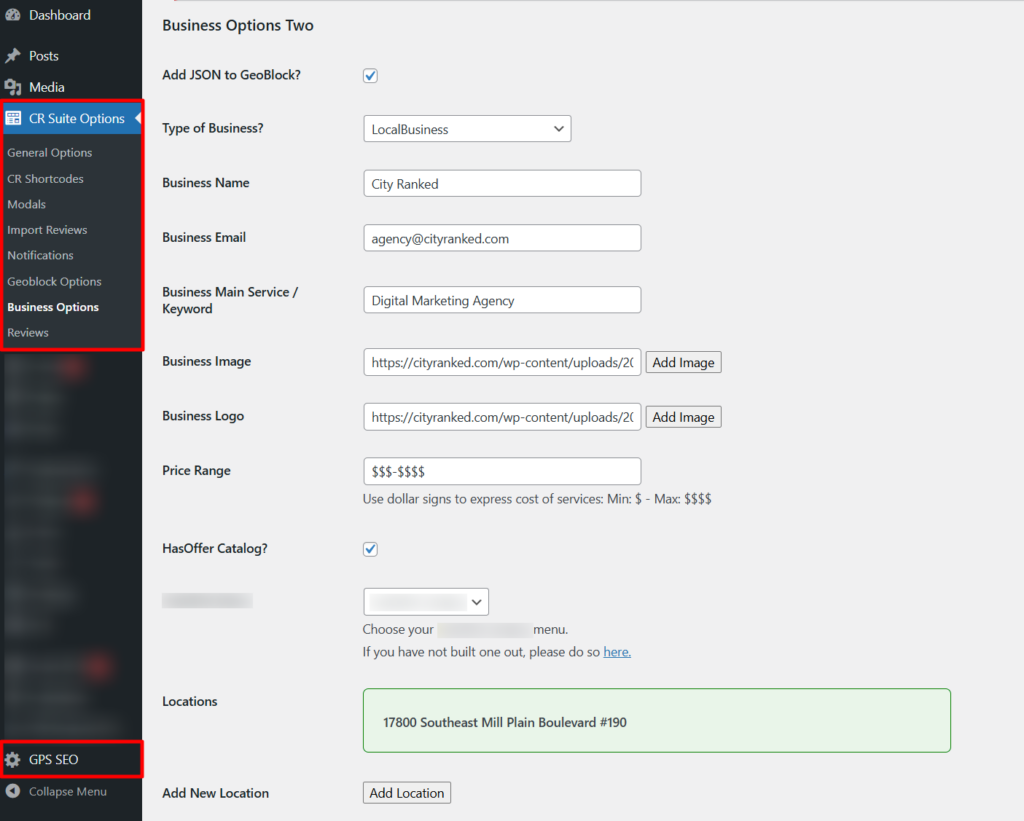
Source: Google Search Central / Google Developer Reference Guide.
Our Injected Schema, proprietary structured data delivered through Google Tag Manager, was built to feed Google clean, consistent entity signals natively. Google reads it. Your competitors never see it.
Shift 3: If You Serve a Local Area, You Just Got Handed an Advantage
Here is the best news in the entire announcement for anyone reading this: local service businesses are the most protected from the traffic collapse. When a homeowner asks Google’s AI a local question, the AI pulls heavily from the same place it always has, the Map Pack, your Google Business Profile, and your local signals.
Google was direct about this. Its guidance says Merchant Center feeds and Google Business Profiles act as a grounding source, the database its AI checks to make sure it is not inventing your hours or services. Every service field, every holiday hour, every service-area ZIP code you fill in becomes training data for local AI answers.
Source: Google Search Central, “Optimizing your website for generative AI features on Google Search.“
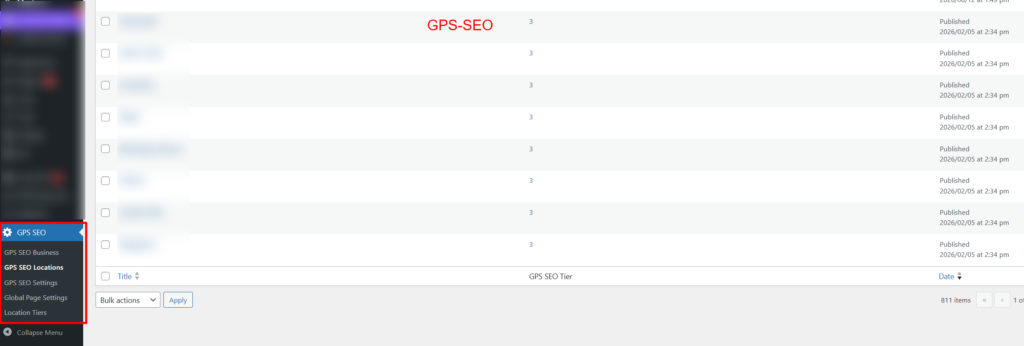
This is the single problem City Ranked has spent the longest solving. Our flagship product, GPS-SEO, was built for exactly this in 2012, anchoring a business to every neighborhood and ZIP code its trucks actually serve, not just the city the office sits in. We wrote about the approach back then GPS-SEO blog, and we have rebuilt it through every coding and schema change since. Most service businesses are invisible the moment someone searches from the next town over. They drive through twenty ZIP codes and rank in three. GPS-SEO closes that gap.
Google also confirmed that its AI now reads your review replies as a freshness and trust signal. So when you respond to a customer, do not just say “Thanks!” Say: “Thank you for choosing us for your water heater repair in [City] — glad we could get out same day.” That one sentence tells the AI you genuinely operate there.
Source: Google Business Profile Help / AI-driven local search updates.
City Ranked’s GPS-SEO software has solved all of these new recommendations, a program we have worked on since 2012 and continue to update as search changes.
Shift 4: Stop Publishing Information. Start Capturing Buyers.
Google’s AI now answers informational questions directly on the results page. “How do I get rid of ants in my car?” gets answered without anyone ever visiting a website. Pure information publishers are getting hammered.
The businesses that win are the ones built around bottom-of-the-funnel intent, the homeowner who does not want to read, they want to book your service and get on with life. Google reinforced this at the 2026 I/O with what its Search Relations team called the three-part test for content worth citing: it must be Unique, Specific, and Authentic. Google’s advice was blunt; audit your site for “commodity content” an AI can summarize on its own, and replace it with proprietary data and real, first-hand experience.
Source: Google I/O Keynote / Search Relations team
There was a technical version of this point too. Addy Osmani, Director of Cloud AI at Google, described what he called token efficiency: AI systems prefer pages that answer the question in the first 40–60 words, then go deeper. Do not bury the answer. Lead with it.
Source: Addy Osmani (Director, Cloud AI, Google) framework documentation.
GPS-SEO was designed around exactly this transactional logic, giving search engines and AI models a crystal-clear picture of where you work, what you sell, why you’re the best option, and the citations that prove it. Not an encyclopedia entry. A true intent buying signal.
Shift 5: The Old Trust Signals Still Win – Google Just Made Them Mandatory
For all the new acronyms, Google was clear that its AI looks for the same trust signals its traditional algorithm always has: E-E-A-T – Experience, Expertise, Authoritativeness, Trustworthiness. To get cited, a page should show clear author bylines, visible credentials, honest “last updated” dates, and real external citations.
Source: Google Search Central, “Creating helpful, reliable, people-first content.”
Google also reminded everyone of something easy to forget in the AI gold rush: your key facts have to live in plain, readable text. Hours, services, and service areas buried inside images, PDFs, or heavy JavaScript force the AI to guess, and a guessing AI does not cite you. Clean semantic and structured HTML wins.
Source: Google Search Central Developer Documentation.
This is the part where being a fifteen-year-old, U.S.-based, founder-led advertising firm stops being a line on an About page and starts being a ranking advantage. Experience and trustworthiness are demonstrated, not rushed into existence the week after an announcement.
Shift 6: You Have to Change How You Measure Success
This will be the hardest pivot business owners will need to shift their thinking on. Click-through rates on informational searches are going to keep falling, because the answer now lives inside the AI result. If you are still judging your marketing by raw website traffic, you are measuring the one thing that is guaranteed to shrink going forward.
Google itself signaled the shift by rolling out dedicated Search Generative AI performance reports inside Google Search Console on June 3, 2026, the first time Google has officially separated traditional “blue link” web search metrics from AI-driven visibility. For the first time, you can track your impressions and visibility inside AI answers as their own number, instead of blended into regular search.
Source: Google Search Central Blog, “Introducing Search Generative AI performance reports in Search Console” (launched June 3, 2026).
Success now means brand impressions, AI citations, and high-intent conversions, buyers, not browsers. This is precisely the problem Skout and the Skout IVR were built to solve. Skout closes the loop: it classifies every inbound call and contact, fires the right signal back to Google so its AI model learns what a genuine new customer looks like, and drops a complete record into your CRM. You stop guessing whether your marketing worked. You measure the only number that pays the bills, qualified customers who actually booked.
The Point
Six changes. Clean structure, real entities, local signals, transactional intent, genuine trust, and honest measurement. That is the checklist Google handed every service business on May 19th.
So go back through it and ask the hard question about the agency you pay every month: are they doing all six? Or are they still selling you the playbook Google just made obsolete?
None of this is new to us. We have been building toward every one of these points since 2012, through every algorithm change Google has thrown at the industry, because it was the right way to build for a real business long before an AI made it mandatory. Most agencies are going to spend the next year learning what we already know. You do not have to wait for them to catch up.
If you want to know exactly where your business stands against these new rules, what is working, what is invisible to Google’s AI, and where the leads are leaking out, that is what our Revenue Recovery Audit is for.